
Supporting ESL Educators: Scaling Classroom Inclusion with Podcax.ai
Discover how Podcax.ai provides language teachers with visual-first tools to accelerate language acquisition and cultural integration for immigrant students in the classroom.
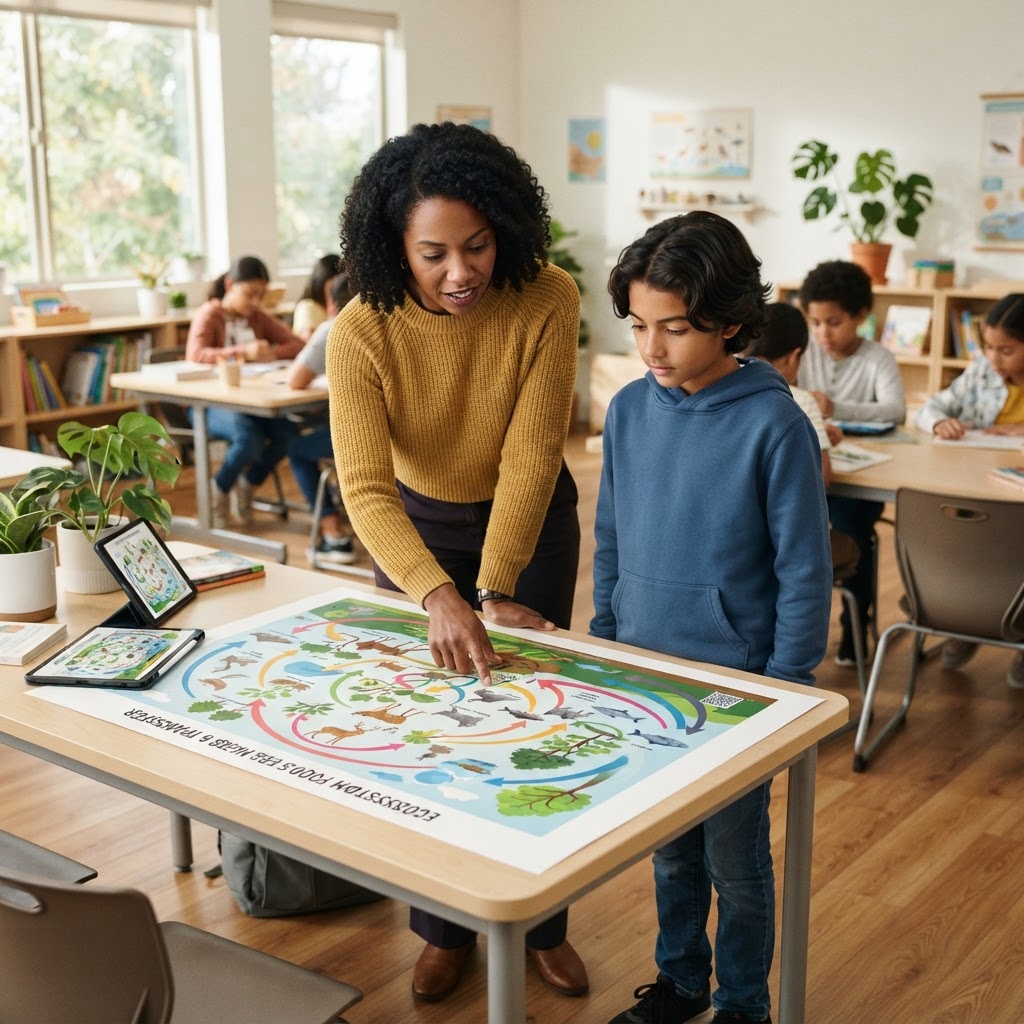
Visual Literacy as a Bridge to Proficiency
For educators working with immigrant students, the challenge of language acquisition often extends beyond vocabulary and grammar. It involves navigating the cognitive load of learning a new language while simultaneously acclimating to a new social and academic environment. Traditional text-heavy curricula can sometimes act as a barrier to students who are still building their foundational literacy, leading to fatigue and disengagement.
Podcax.ai addresses this by leveraging visual language-learning principles. By centering classroom activities around high-context imagery and visual associations, educators can lower the affective filter—a key psychological hurdle in second language acquisition. This approach allows students to connect concepts to imagery, fostering a more intuitive grasp of the target language without the immediate pressure of complex syntax.
Empowering Teachers to Personalize Instruction
Teachers are the architects of the classroom experience, and they require tools that offer both structure and flexibility. Podcax.ai serves as a scaffolded resource that allows instructors to integrate visual media into their daily lesson plans seamlessly.
Instead of relying solely on generic textbooks, teachers can curate content that resonates with the lived experiences of their students. This customization is particularly vital for immigrant students, as it validates their cultural background while teaching them the necessary vocabulary for everyday life. Key benefits of integrating this approach include:
Fostering Inclusive Learning Environments
Creating a truly inclusive classroom requires recognizing that every student processes language differently. Podcax.ai acts as a supportive layer that helps teachers differentiate instruction efficiently. For students with varying levels of prior education or different linguistic backgrounds, visual cues serve as a universal baseline.
When a teacher uses visual aids to demonstrate a process or explain a concept, they provide an anchor point for all students, regardless of their current proficiency level. This reduces the isolation often felt by new arrivals and encourages more active participation in group settings. As students grow more confident in their ability to decode the visual-verbal relationship, their willingness to engage in verbal expression and critical thinking increases accordingly.
By prioritizing accessible, visual-first strategies, educators can transform the language classroom into a space where immigrant students feel seen, capable, and ready to learn. Podcax.ai remains committed to providing the infrastructure that makes this kind of personalized, high-impact teaching possible in modern schools.
Podcax support
Questions or feedback?
Contact our team about this story, a lesson or anything you would like us to improve.
Contact us